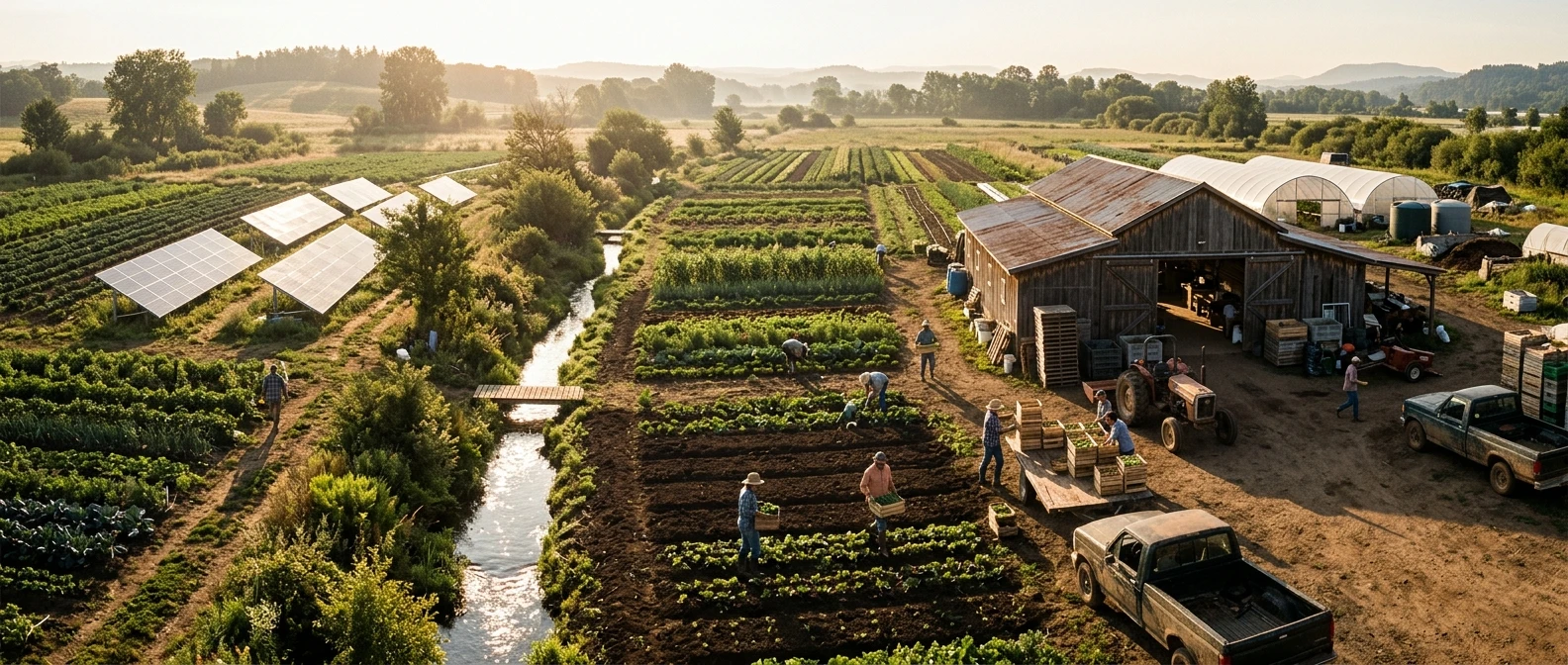
Most founders who hear “sustainable” assume it means doing less harm: fewer emissions, less waste, a slower rate of extraction. That ceiling is low enough that a business can clear it while still taking more from its workers, its soil, its water table and its community than it ever puts back. Regenerative business design starts from a different question. Instead of asking how little damage a company can get away with, it asks what the company would have to do for the systems around it to come out ahead after it operates.
Profit and repair are not opposites
A business that regenerates more than it extracts still has to make money. Payroll, rent and debt don’t wait for a watershed to recover or a soil test to improve. The work here treats profit and repair as two outputs of the same design, not a trade-off you negotiate between quarterly. A regenerative supply chain that pays farmers fairly and rebuilds soil health usually costs less to run within a few years, because healthier soil needs fewer inputs and healthier relationships need less management overhead. The repair isn’t charity bolted onto the business model. It’s the mechanism that makes the margin durable.

Why ‘sustainable’ keeps meaning ‘less bad’
Sustainability frameworks were built to measure harm reduction, so that’s what they got good at measuring. A company can report lower emissions per unit, switch to recycled packaging and still be pulling more value out of its workers, suppliers and local ecosystem than it returns. None of that shows up on a sustainability scorecard built to track inputs like energy and carbon. Regenerative design asks a harder question underneath the easy one: after this business operates for a year, is the soil, the water table, the local economy and the workforce better off or worse off than before it arrived? Most companies have never had to answer that question, because nobody built it into how they measure success.
What regenerative business design actually changes in a company
This isn’t a marketing layer you add after the business model is set. It changes what gets measured, who gets paid, and which inputs the company treats as free. A regenerative model prices in the cost of rebuilding what it uses rather than assuming replacement will happen on its own. It treats local suppliers, workers and ecosystems as partners whose condition affects the business’s long-term capacity, not as external costs to minimize. Those shifts touch procurement, pricing, hiring and investment decisions, which is why this has to be designed at the business model level rather than patched in through a single green initiative.
The systems this Hub helps you redesign
Every business runs on a handful of underlying systems, whether or not anyone in the company has named them. This Hub works through five of them directly:
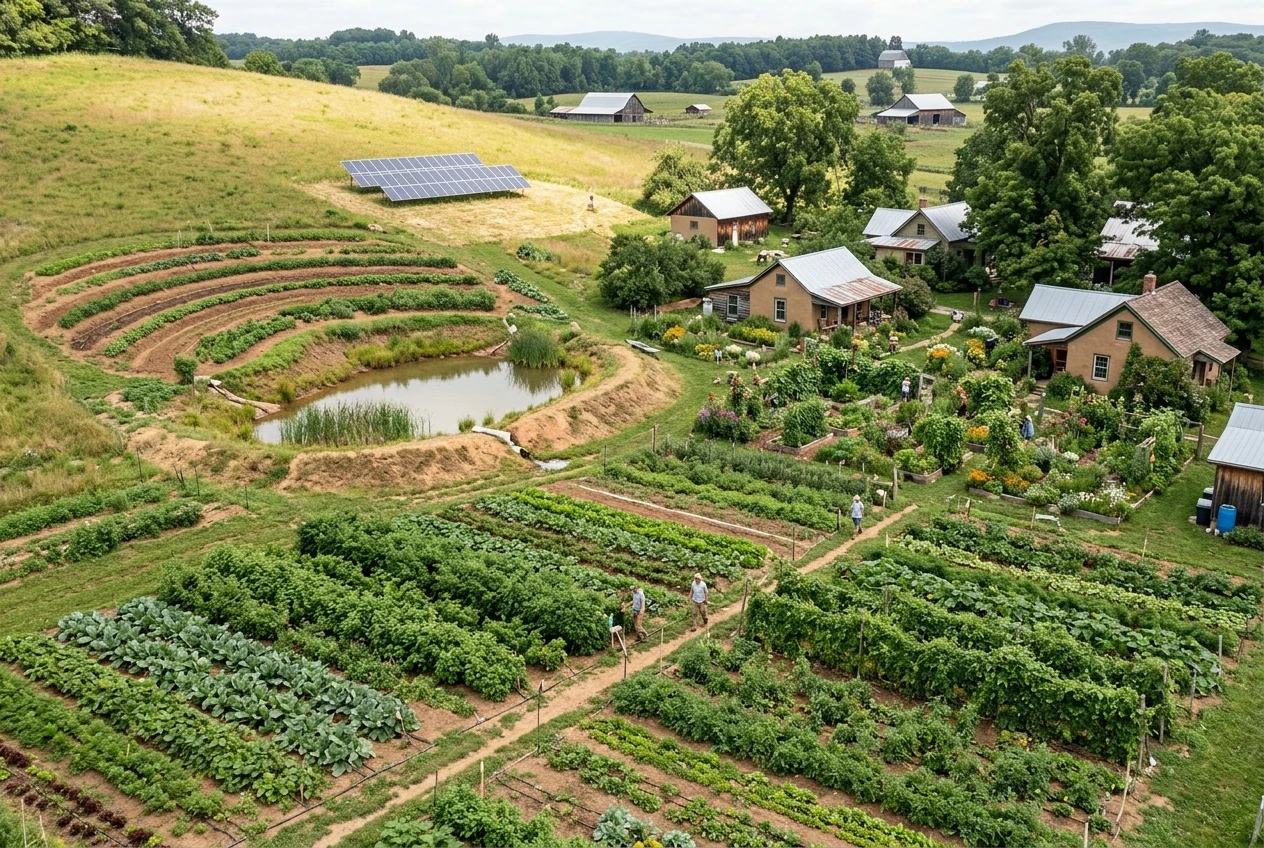
- Energy: how power is generated, stored and used, and what it would take to make that cycle closer to self-sustaining.
- Water: how a business sources, uses and returns water to the systems it draws from.
- Soil: for any business touching land, food or materials, whether operations build soil health over time or deplete it.
- Food: how supply chains for food-based businesses can shorten, localize and strengthen the communities they depend on.
- Community: how a business’s presence changes the economic and social health of the place it operates in, for better or worse.
Each system gets its own playbook, because the redesign work in a water system looks nothing like the redesign work in a hiring pipeline. You don’t need to tackle all five at once. Most operators get the clearest results starting with whichever system their business touches most directly.
Proof from the field

Regenerative models aren’t theoretical. Businesses already run supply chains that pay growers enough to invest back into their land, storage systems modeled on biological processes that outperform conventional batteries on certain use cases, and local food networks that keep more revenue circulating inside the community that grows the food. The pattern across these examples holds: the regenerative version wasn’t bolted onto an existing business. It was the business model from the start, or the point where the company got rebuilt. Why regenerative business is the future of sustainable growth in startups goes deeper into what makes these models hold up financially over time.
Who this Hub is built for
This work is for founders building a company from the ground up who don’t want to retrofit ethics onto a model that was never designed for them. It’s for operators running an existing business who can see where their current model extracts more than it returns and want a practical path to change that. And it’s for consultants who need a coherent framework to bring regenerative thinking into client work, rather than a collection of disconnected green initiatives.
Where to start
You don’t redesign a whole business in one sitting, and trying to usually stalls the work before it starts. Pick one system in your business, energy, water, soil, food or community, and open the playbook that redesigns it first.